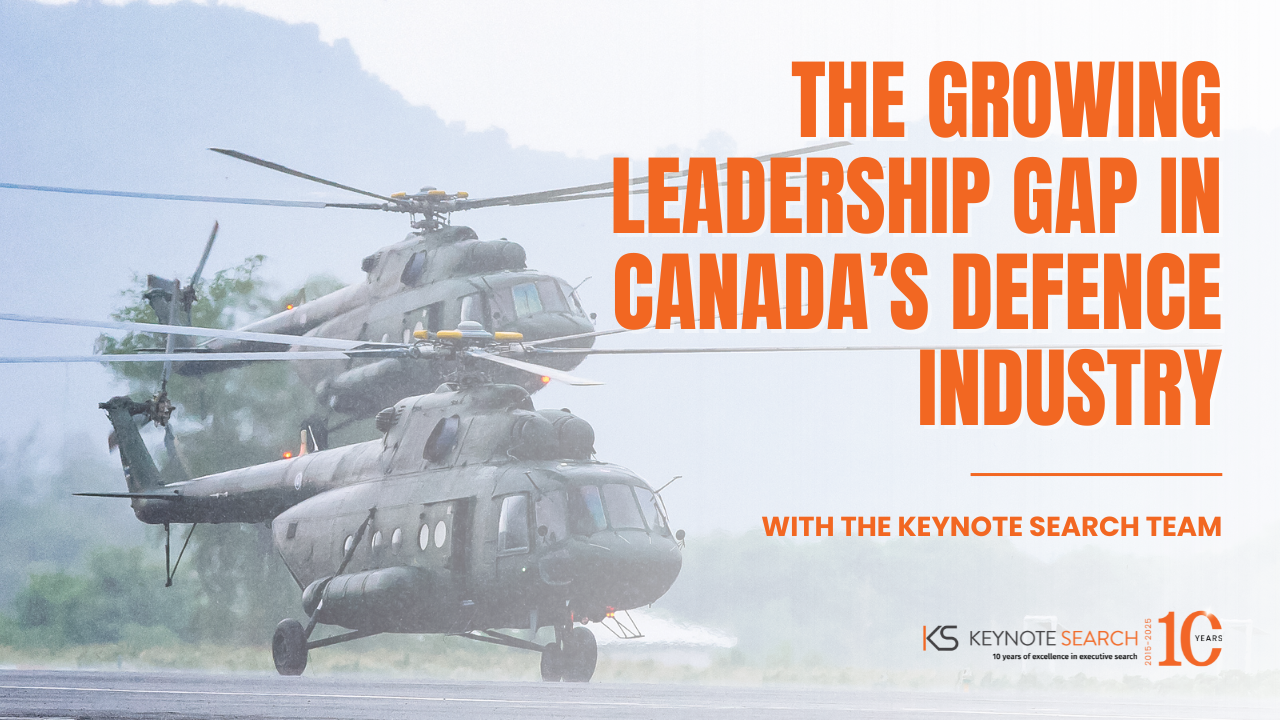
The Growing Leadership Gap in Canada’s Defence Industry
Canada’s defence industry is entering a time where leadership capacity is under a real strain. As expectations around capability development, innovation, and international engagement increase, the pool of senior leaders with the experience to manage that complexity has not expanded at the same rate. The result is a widening leadership gap.
This shortfall creates real operational and strategic exposure for Canadian defence firms. It is not the result of weak technical capability or a lack of commitment within the sector, but rather the outcome of demographic change, shifting leadership requirements, and long-standing approaches to developing and recruiting senior talent.
An Aging Leadership Cohort and Limited Succession
Demographics are a major factor in the current leadership gap. Many of Canada’s most senior defence executives developed their careers in an environment defined by stability, long program cycles, and a largely domestic focus. That generation is now nearing retirement, in many cases more quickly than organizations had planned for.
Succession planning has struggled to keep up with this shift. Defence firms have traditionally emphasized long internal tenures and gradual advancement into senior roles. While this supported continuity, it has left many organizations with limited executive depth. This has made leadership transitions more difficult when departures occur.
Defence Leadership Has Become More Complex
In addition, the scope of defence leadership roles has broadened considerably. Senior executives are no longer focused solely on managing programs, platforms, or contracts. They are expected to operate in an environment shaped by cybersecurity risk, digital change, global supply chains, export controls, and increased scrutiny from government and allied partners.
This shift has exposed a gap between traditional defence career paths and what senior roles now demand. Many capable leaders bring deep operational or technical experience but have had limited exposure to international markets, cross-border partnerships, or emerging technologies that increasingly define defence strategy.
Competition for Talent Across Sectors
The defence industry is also competing for leadership talent in ways it did not previously. Executives with experience in cybersecurity, advanced technology, intelligence systems, and complex regulated environments are in demand across multiple sectors, including commercial technology, critical infrastructure, and government.
As compensation structures, the pace of innovation, and global mobility increase outside traditional defence organizations, Canadian firms often struggle to attract or retain leaders with options beyond the sector. This competition further narrows the pool of available executives at a time when demand is rising.
Security and Clearance Constraints Add Pressure
Essential security clearance requirements introduce added complexity into leadership development and recruitment. Clearance timelines can slow hiring decisions and deter external candidates who are unfamiliar with the defence environment. Within organizations, these requirements can also limit lateral movement, reducing opportunities for emerging leaders to build the range of experience expected at the senior level.
Over time, this has contributed to a leadership environment that is more cautious and inward-looking than the sector’s current demands would suggest.
The Risk to Growth and Competitiveness
Defence firms with limited executive depth often find it harder to scale, pursue international opportunities, or respond quickly to shifts in policy and procurement. At the senior level, leadership gaps can slow decision-making, raise operational risk, and undermine credibility with government customers and global partners.
In a sector where trust, continuity, and demonstrated capability are essential, leadership constraints can quickly become a competitive liability.
Rethinking Leadership Development and Recruitment
Closing the leadership gap will require more than incremental change. Defence organizations will need to reassess how senior leaders are identified, developed, and brought into the business. That means investing earlier in leadership development, creating opportunities for broader international and cross-sector exposure, and taking a more flexible view of executive recruitment.
As a result, many Canadian defence firms are beginning to look beyond traditional career paths and domestic talent pools. Global executive search, selective external hiring, and more deliberate succession planning are increasingly being treated as core capabilities rather than exceptions.
A Defining Challenge for the Sector
The growing leadership gap in Canada’s defence industry is a defining challenge of the current decade. It reflects deeper changes in how defence organizations operate, compete, and innovate. Firms that acknowledge this reality and adapt their leadership strategies accordingly will be better positioned to sustain growth and meet the evolving needs of government and allied partners.
Those that do not risk finding themselves constrained not by technology or opportunity, but by the absence of leaders prepared to navigate what comes next.
Looking to hire executive talent in the defence sector? Contact us today to learn more about our executive search services and how they can propel your business forward with the right leadership.
More from our blog
Expert Response to the Release of Canada’s Defence Industrial Strategy 5 Leadership Mistakes You Might Be Making Without Realizing It Looking Ahead: What 2026 Could Mean for Executive Hiring in Ottawa What Boards Get Wrong About Executive Search in the Defence Sector How Counter-Offers Are Reshaping the Talent Landscape The Talent Market Is Shifting: What We’re Seeing This Quarter Highlights From Our Team’s Recent Impactful Projects 2025 Summer Update – Sunshine, Slowdowns and Shifting Expectations 10 Leadership Lessons from a Decade in Business How to Integrate Your New Hire From Day 1 2025 Spring Update – Trump, Tariffs and Terminations The 2024 Labor Market: A Year of Conflicts and a Glimpse into 2025 How to Adjust to New Communication Styles in the Workplace: A Guide for New Employees and Employers How to Attract and Retain Top Executive Talent in Today’s Market Guiding New Hires: Addressing Common Missteps and Supporting Success